We have all encountered CAPTCHAs during our daily digital journeys. Whether we are trying to log into a portal, purchase tickets, or simply read an online article, these security prompts are a ubiquitous part of modern internet life. They ask us to click on traffic lights, identify crosswalks, or type out distorted text to prove one simple fact: that we are human beings. Because we see them so frequently, we have developed a deep-seated subconscious trust in them. We associate CAPTCHAs with security and legitimacy. But what happens when the very tools designed to protect us are weaponized by sophisticated adversaries to trick us into compromising our own systems?
This is the chilling reality of a highly sophisticated cyber espionage campaign targeting Ukrainian organizations. Russian state-sponsored threat actors have been observed leveraging a clever and insidious social engineering tactic known as the ‘ClickFix’ strategy. According to the Computer Emergency Response Team of Ukraine (CERT-UA), this activity has been officially attributed to a threat group tracked as UAC-0145. This group is identified as a sub-cluster operating under the umbrella of Sandworm, one of the most notorious and destructive advanced persistent threat (APT) units affiliated with the Russian Main Intelligence Directorate (GRU). In this post, we will dive deep into how this campaign works, why it is so effective, who is behind it, and what we can do to protect ourselves from these deceptive tactics.
Deconstructing the ClickFix Social Engineering Strategy
To understand the threat posed by UAC-0145, we must first dissect the ClickFix strategy itself. Unlike traditional phishing attacks that rely on convincing a user to download and run a malicious executable file, ClickFix turns the user into an active participant in their own infection process. It is a psychological masterclass that exploits our natural inclination to solve technical problems and bypass frustrating web errors.
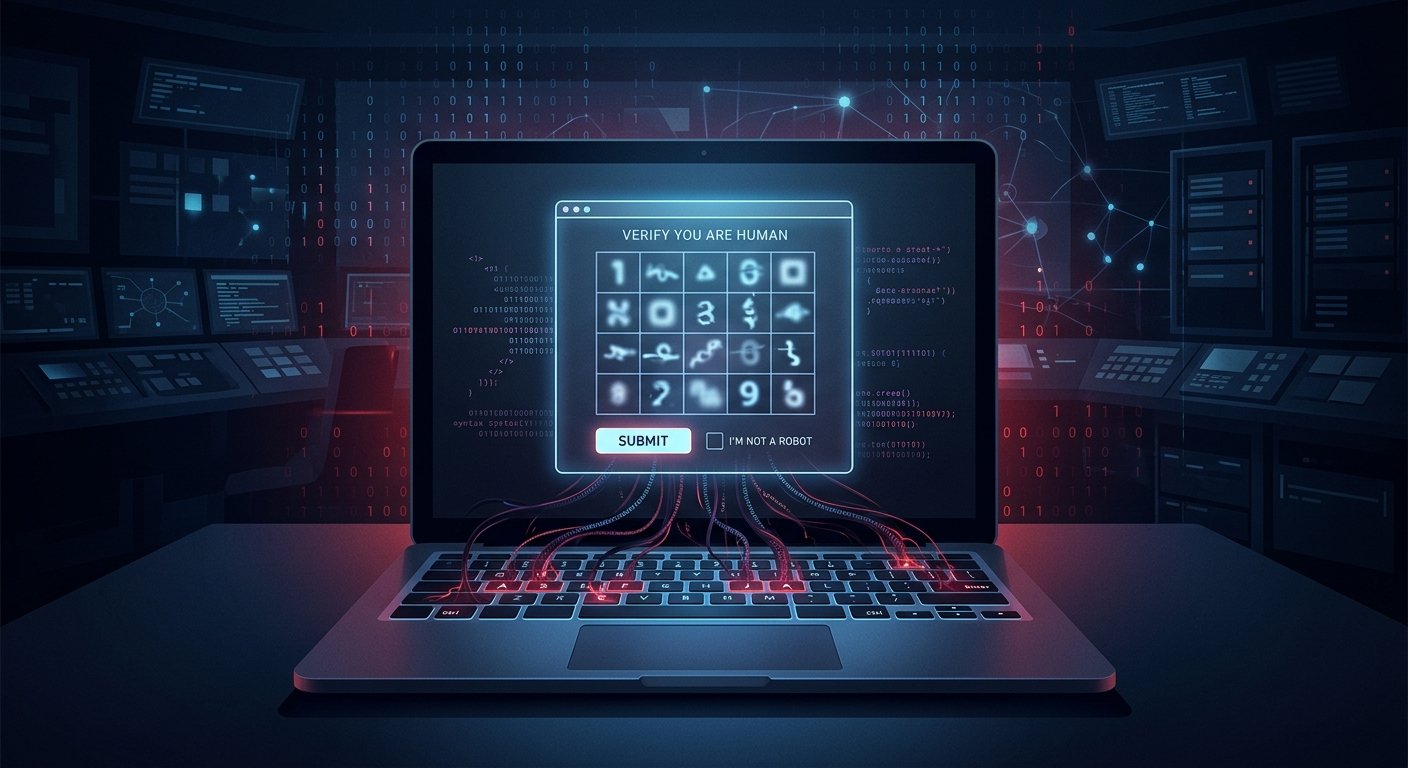
The attack typically begins when a target visits a compromised website or is lured to a malicious page via targeted phishing emails. Instead of finding the content they expected, the user is presented with a realistic-looking technical error or a security verification prompt. For example, the page might display an error stating that the document viewer failed to load, or a mock CAPTCHA verification screen.
The true trick lies in the instructions provided to resolve the issue. The fake CAPTCHA or error message informs the user that they must perform a quick verification step to proceed. It instructs them to copy a specific string of code to their clipboard, open their system’s Run dialog box by pressing the Windows key + R, paste the copied command into the box, and press Enter. By pasting and executing this command, the user inadvertently bypasses almost all browser-based security filters. Because the malicious code is executed manually by the user through native system utilities, the web browser does not flag it as a dangerous download. It is a brilliant bypass of traditional perimeter defenses that relies entirely on human error.
Who is UAC-0145? Unmasking the Threat Actor
The attribution of this campaign to UAC-0145 is highly significant. CERT-UA has identified UAC-0145 as a specialized sub-cluster within Sandworm. For anyone who follows cybersecurity, the name Sandworm sends a shiver down the spine. Also known as BlackEnergy, Voodoo Bear, or TeleBots, Sandworm is a highly aggressive cyber warfare unit operating under the GRU’s Main Center for Special Technologies (GTsST).
Historically, Sandworm has been responsible for some of the most disruptive and damaging cyberattacks in history. They were the masterminds behind the cyberattacks on Ukraine’s electricity grid, which left hundreds of thousands of citizens in the dark during freezing winters. They were also responsible for the devastating NotPetya malware outbreak in 2017, which caused billions of dollars in damages globally.
While Sandworm is famous for its highly destructive wiper malware, the activities of UAC-0145 represent a different, equally dangerous facet of their operations: stealthy intelligence gathering and espionage. By leveraging the ClickFix strategy, UAC-0145 is not looking to destroy systems immediately. Instead, they are looking to quietly infiltrate Ukrainian devices, steal sensitive information, gather credentials, and establish persistent access within targeted networks. This intelligence can then be used to facilitate lateral movement, monitor communications, or prepare the ground for future, more destructive operations.
The Anatomy of a ClickFix Attack
To fully visualize how this attack operates in the wild, let us break down the sequence of events into a step-by-step pipeline:
- Step 1: The Lure. The victim receives a phishing email containing a link, or they navigate to a compromised legitimate website that has been injected with malicious scripts.
- Step 2: The Deceptive Overlay. The malicious script on the webpage detects the user’s browser. It overlays a highly convincing, fake error message or CAPTCHA prompt on top of the actual content.
- Step 3: The Call to Action. The overlay instructs the victim that to fix the error, they must copy a pre-written command. The website often provides a convenient ‘Copy’ button to make this process as seamless as possible.
- Step 4: The Execution. The victim is guided to open the Windows ‘Run’ utility (Win+R), paste the copied command, and execute it. This command is designed to launch PowerShell in the background.
- Step 5: The Payload Delivery. Once executed, the PowerShell script silently connects to an external command-and-control (C2) server controlled by UAC-0145. It downloads and executes the primary malware payload, which is typically an advanced information stealer.
- Step 6: Data Exfiltration. The infostealer scans the infected device for valuable data, including saved browser credentials, session cookies, and sensitive documents, before securely transmitting this data back to the attackers.
Why Infostealers are the Weapon of Choice
In the world of modern cyber espionage, data is the ultimate currency. While ransomware and wipers make headlines, information stealers are the silent workhorses of state-sponsored groups.
By deploying infostealers, UAC-0145 can harvest session cookies. This is extremely critical because session cookies allow attackers to bypass multi-factor authentication (MFA). If an attacker steals an active session cookie for a cloud service, they can simply import that cookie into their own browser and gain instant access to the victim’s account without needing to input a password or solve an MFA prompt. This grants them access to email systems, cloud storage, and internal corporate portals, allowing them to conduct quiet, long-term espionage.
How to Protect Your Network Against ClickFix Tactics
Defending against ClickFix requires a combination of technical controls and robust user awareness. Because the attack relies heavily on user interaction, education is your first line of defense. Here are key strategies to mitigate this threat:
- User Education and Awareness: Educate employees that legitimate websites, CAPTCHAs, and support portals will never ask them to copy and paste commands into the Windows Run box or PowerShell. Any prompt asking for manual command execution should be treated as an immediate red flag.
- Restrict PowerShell and CLI Access: Implement policies to restrict command-line interface (CLI) access, such as PowerShell and Command Prompt, for standard, non-administrative users who do not require these tools for their daily work.
- Endpoint Detection and Response (EDR): Deploy advanced EDR solutions that monitor for anomalous command-line executions, particularly PowerShell launching from common user utilities or executing obfuscated scripts.
- Credential and Session Management: Implement short session lifespans for critical applications and employ risk-based conditional access policies to detect and block access from unusual locations or devices, even if a valid session cookie is presented.
A Enthusiast’s Perspective: The Human Element
As someone who is deeply passionate about cybersecurity, I find the ClickFix strategy both fascinating and deeply concerning. It highlights a fundamental truth about security: no matter how strong your firewall, how advanced your antivirus, or how secure your network architecture is, the human element remains the most vulnerable link.
By exploiting our curiosity, our desire to fix things, and our trust in common web elements like CAPTCHAs, threat actors can bypass millions of dollars in security infrastructure with a simple copy-paste command. It is a stark reminder that we must remain constantly curious, questioning, and vigilant in our digital lives. Stay safe out there, keep learning, and remember—never copy-paste your way into trouble!
Original article: Read More Here
About the Author